
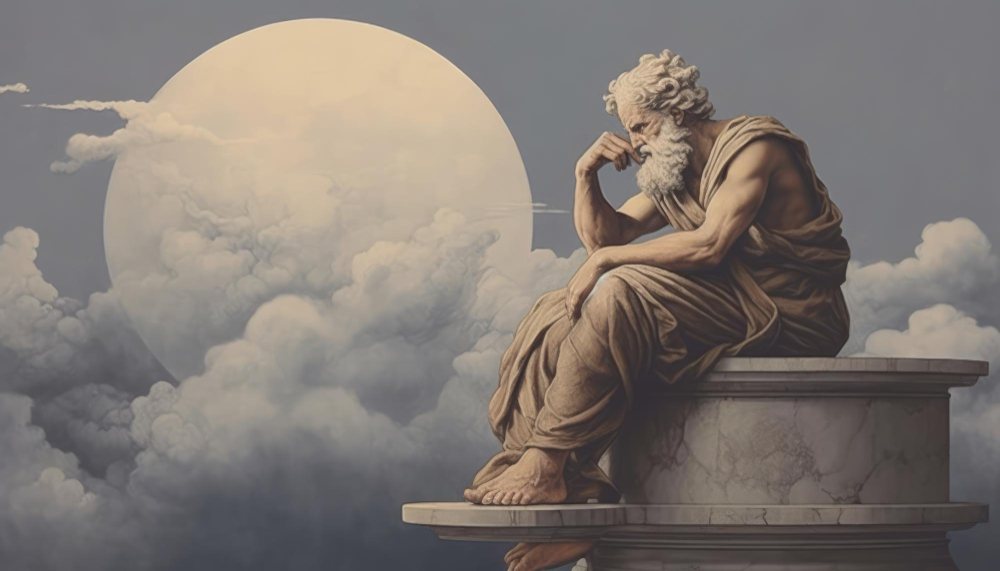
Philosophy as a Compass in the Stormy Oceans of Life
Life brings us all kinds of experiences—joyful and painful, uplifting and devastating. For someone living with bipolar disorder, however, these ups and downs are often amplified by the intensity of our inner world. What may be a minor inconvenience for one person can become a trigger for an episode, overwhelming anxiety, or a descent into depression for us.
All of us are exposed to countless external influences that can pull us away from our path. But the real question is:
Who do we want to be, even when our mind and emotions fluctuate?
And what remains stable when our mood is not?
For me, this is where philosophy comes in.
Why Philosophy Matters in Bipolar Disorder
With bipolar disorder, we cannot always control our mood, our energy, or the speed of our thoughts. What we can influence, however, is our attitude toward what happens to us.
In today’s world of social media, constant comparison, and relentless pressure to achieve, there are endless distractions. For someone with bipolar disorder, these influences can be even more dangerous—they can throw off our inner compass and worsen episodes.
Philosophy has become a mental stabilizer for me. Not a cure. Not a replacement for professional treatment. But a source of support that I can return to whenever my mind starts moving in the wrong direction. It also serves as a compass, helping me stay on the best possible path.
Stoicism
Stoicism emerged around 300 BC in ancient Greece. It was founded by Zeno of Citium and later developed by thinkers such as Epictetus, Seneca, and the Roman emperor Marcus Aurelius.
Interestingly, Stoicism was never a philosophy for people living comfortable lives. Quite the opposite—it was born during times of uncertainty, wars, disease, and political turmoil. It was designed for living in the real world, not under ideal conditions.
The core idea of Stoicism is simple:
Distinguish between what you can control and what you cannot.
For someone with bipolar disorder, this is an incredibly powerful principle. I cannot control the fact that I have this diagnosis. I cannot always control whether an episode will occur. But I can control how I respond to it and how I work with it.
Daily Philosophy as Mental Hygiene
Personally, I read Stoic philosophy almost every day. There are books that offer one reflection for each day of the year. You can start reading on any date, and each day presents a short thought to reflect on.
By reading one idea every day, I gradually shape my mind in a healthier direction. The right thoughts can be incredibly helpful during periods when you feel hypomania approaching or when you sense yourself slipping into depression. More importantly, they serve as a form of prevention—helping you come to terms with your past and better cope with whatever is happening around you.
It becomes a mental anchor.
Philosophy and My Experience with Mania and Shame
There was a time when I experienced intense anxiety and overwhelming shame because of a news article that showed me in handcuffs. The article was published by several media outlets and spread across social media, often accompanied by mocking or humorous comments.
Nobody focused on the fact that I was in the middle of a severe manic episode. Nobody talked about the diagnosis.
People only saw the image.
What followed was a period during which I avoided public places, other people, and even my own city. Then came a depressive episode, during which I came dangerously close to taking my own life.
Stoicism didn’t tell me, “Everything will be okay.”
It asked me, “This happened. How are you going to respond to it?”
Accepting the Past to Move Forward
One Stoic idea says:
It is not the past or the future that torments us, but our attitude toward them.
For someone with bipolar disorder, the past is often filled with shame, guilt, regrets, and endless “what ifs.” But we cannot change the past.
What we can change is our relationship with it.
When I accepted that:
- I have a diagnosis,
- I have a public past,
- I have made mistakes and experienced failures,
I felt an enormous sense of relief.
My mental health gradually began to stabilize.
Bipolar Disorder, Stigma, and Inner Freedom
I know many people with bipolar disorder who constantly fear being judged or labeled. They worry about what doctors, family members, colleagues, or society might think of them. That fear only increases anxiety and emotional pressure.
Among many other things, Stoicism taught me one essential lesson:
Other people’s opinions are not under my control.
What is under my control is how I choose to live today, the values I follow, and the way I manage my condition.
Philosophy Is More Than Stoicism
It’s important to remember that philosophy is much broader than Stoicism, and Stoicism will not resonate with everyone. There are many philosophical traditions that can help people—including those living with bipolar disorder—find stability, meaning, and inner order.
For example, existentialism explores the meaning of life and personal responsibility. Buddhist philosophy focuses on suffering, attachment, and mindful awareness of the present moment. Epicureanism emphasizes tranquility, simplicity, and finding joy in life’s small pleasures. Others may feel drawn to Taoism, which teaches us to flow with life rather than constantly struggle against it.
Everyone can discover a philosophy that speaks to them and helps them better understand themselves.
For me, however, Stoicism has had the greatest impact. I recognize myself in its principles, deeply identify with them, and they help keep me grounded in reality—even during periods when my mind feels unstable. It is a philosophy I return to again and again because it provides me with a solid point of reference while living with bipolar disorder.
Conclusion: A Stable Mind in an Unstable World
I don’t have a magical formula for perfect stability. Bipolar disorder is a lifelong challenge.
But philosophy—especially Stoicism—has helped me:
- accept reality,
- reduce anxiety,
- gain perspective on my episodes,
- and gradually take back control of my life.
Not control over everything.
But control over what truly matters.